Mithila Makhana and why Bihar grows most of India's makhana
Mithila Makhana is makhana from the Mithila region of north Bihar, and the name carries a Geographical Indication tag. This guide covers what the tag means, where Bihar’s makhana is grown, and how a seed gets from a pond bed to a sealed pack.
By the Makau Foods team. Last updated:
Quick answer
Mithila Makhana is a GI-tagged name for makhana produced in the Mithila region of Bihar. Bihar grows nearly three-fourths of India’s makhana. The seeds are collected by hand from pond beds, then dried, roasted, popped, and graded by size.
What Mithila Makhana is
Makhana is the seed of Euryale ferox, a water plant grown in shallow ponds, lakes, and wetlands. The edible part is the seed, which is roasted and popped into the white fox nut sold in shops. India is the largest producer in the world, with cultivation mainly in Bihar, West Bengal, and Assam.
Mithila is a region of north Bihar, and Mithila Makhana is the name protected for makhana from there. In Darbhanga and Madhubani, the traditional Mithila makhana districts, most of it is still farmed the old way, in ponds.
What the Mithila Makhana GI tag means
A Geographical Indication ties a product’s name to the place it comes from. In its backgrounder on the sector, the Government of India’s Press Information Bureau states that Mithila Makhana has been granted a GI tag in recognition of the unique quality, reputation, and traditional knowledge associated with makhana from the Mithila region. It adds that GI status gives legal protection, sets the product apart in the market, and strengthens its branding at home and abroad.
The tag protects the name. It does not mean every pack of makhana from Bihar is Mithila Makhana, and it is not a grade or a size standard. If a pack claims the GI tag, the claim should be printed clearly and the seller should be able to back it up.
Source: PIB backgrounder on India's makhana sector (19 August 2026). Last checked 15 October 2026.
Which state produces most makhana
Bihar, by a wide margin. PIB reports that Bihar accounts for nearly three-fourths of India’s makhana and around 80 to 85 percent of global supply. India produced 63,910 MT in 2024-25 and an estimated 80,590 MT in 2025-26, of which Bihar produced about 60,000 MT.
Makhana districts in Bihar
| District or region | What the source says |
|---|---|
| Supaul, Saharsa, Madhepura | Kosi basin districts where cultivation is especially prominent (PIB) |
| Mithila and Seemanchal | Nearby regions of north Bihar with significant cultivation (PIB) |
| Purnia, Katihar | Highest production in 2021-22, moving from ponds to field farming (ICRIER) |
| Darbhanga, Madhubani | Traditional makhana districts that mainly farm in ponds (ICRIER) |
Field farming and improved varieties such as Swarna Vaidehi and Sabour Makhana-1 have raised yields. Average productivity rose from 2.03 MT per hectare in 2024-25 to 2.34 MT per hectare in 2025-26.
Sources: PIB backgrounder on India's makhana sector (19 August 2026); ICRIER, Strategies to Boost India's Makhana Exports (2025), published on the APEDA website. Last checked 15 October 2026.
Makhana harvest: from pond bed to graded pack
- Sowing and growing. Seed is sown around November. The plant leafs out through winter, is transplanted around March, and flowers and fruits in April and May.
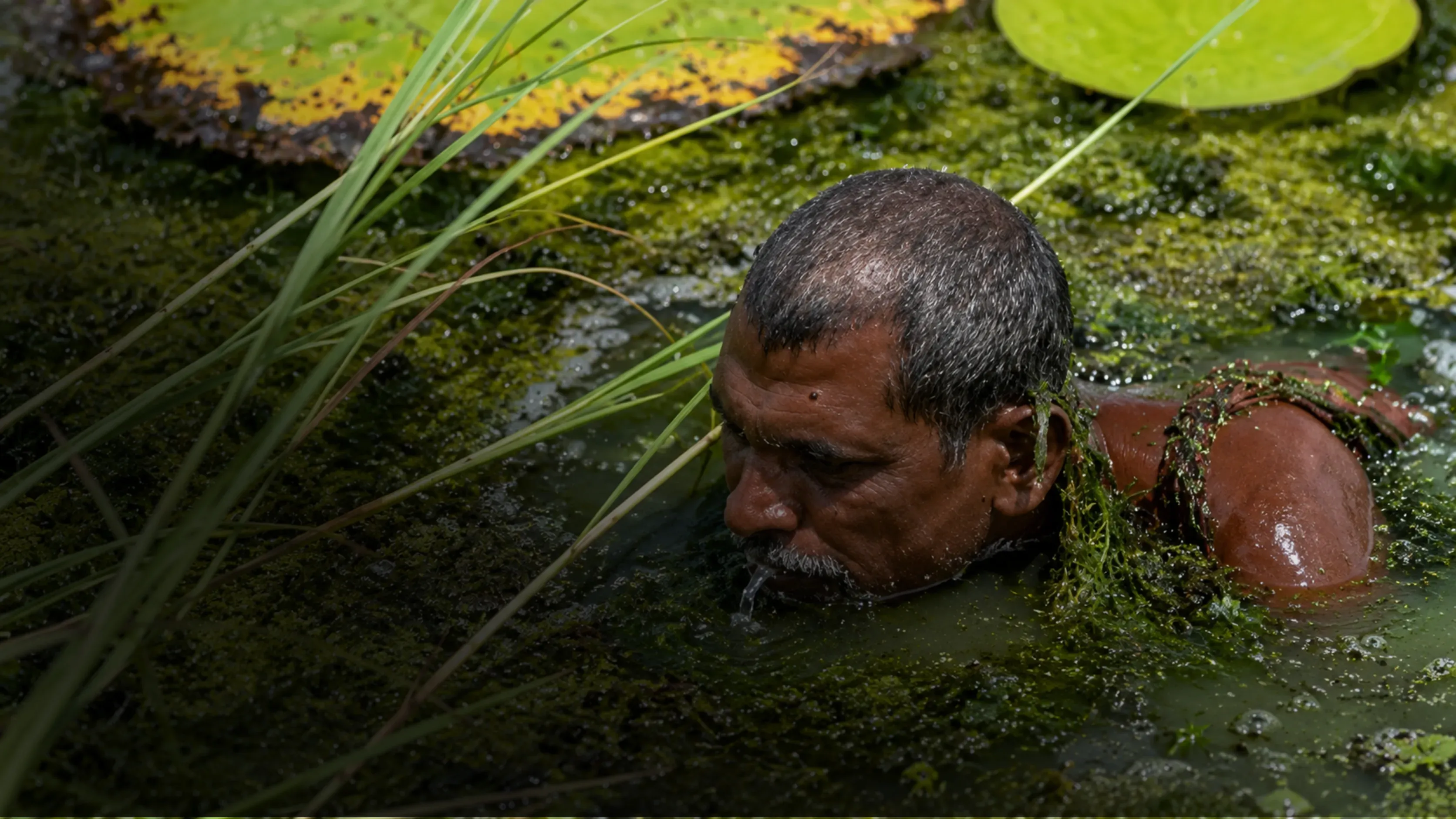
- Harvest. From July to October the seeds are collected by hand from the bottom of the pond. The work is done mostly by the Mallah fishing community of Mithila, using specially designed sieves, and it is the most expensive part of growing makhana.
- Cleaning and drying. The raw seeds are washed and dried, mostly at household or village level with traditional tools.
- Roasting and popping. The dried seeds are roasted at high temperature and then popped, which expands the kernel into the light, crunchy makhana sold in shops.
- Polishing and grading. The popped makhana is polished, sorted, and graded by size and quality. Larger, better-quality seeds fetch higher prices.
- Packing. The finished makhana is packed in bulk sacks for traders or in retail packs.
The size grades used at the grading step are explained in our guide to makhana size grading.
Sources: ICRIER, Strategies to Boost India's Makhana Exports (2025), published on the APEDA website; PIB backgrounder on India's makhana sector (19 August 2026). Last checked 15 October 2026.
How Makau sources its makhana
Makau buys makhana directly from harvesting families in Bihar, including families from the Mallah community, rather than through a chain of traders, and supports more than 40 Bihar harvest families. Every seed is then checked by hand, sorted to our own A+ Grade, and sealed at source. The story is on our homepage origin section.
Our makhana is sourced from Bihar. It is not sold under the Mithila Makhana GI tag, and we do not claim it is.
What to look for when buying makhana from Bihar
An origin you can check. Bihar is a fair claim for most makhana, but a specific district or a GI tag should be stated clearly on the pack.
A stated grade and size. Look for consistent pieces and real-size photos, not just the word premium.
One ingredient, if you are buying raw makhana.
A sealed, dated pack, since makhana absorbs moisture and goes soft.
Before you compare prices, work out the makhana price per kg for each pack. Our own pack details, origin, and price are on the raw makhana shop page.
The National Makhana Board and exports
The Government of India announced a National Makhana Board in the Union Budget 2025-26, and the Board was launched in Bihar on 15 September 2025. A central scheme for makhana has an outlay of ₹476.03 crore for 2025-26 to 2030-31, covering research, quality seed, farmer training, harvesting and post-harvest practice, branding, and exports.
In 2025-26 India exported 7,264.89 MT of makhana products, worth ₹19,296.08 lakh. The United States took about 40 percent, Canada 20 percent, and the UAE 17 percent.
Source: PIB backgrounder on India's makhana sector (19 August 2026). Last checked 15 October 2026.
Keep reading
Mithila makhana: common questions
What is Mithila makhana?
Mithila Makhana is makhana produced in the Mithila region of north Bihar. The name carries a Geographical Indication (GI) tag, which recognises the quality, reputation, and traditional knowledge tied to makhana from that region.
Does Mithila makhana have a GI tag?
Yes. The Government of India's PIB backgrounder on the makhana sector confirms that Mithila Makhana has been granted a GI tag. GI status gives the name legal protection and helps it stand apart in domestic and export markets.
Which state produces the most makhana?
Bihar. It grows nearly three-fourths of India's makhana and around 80 to 85 percent of the world's supply, according to PIB. Bihar produced about 60,000 MT in 2025-26.
Which districts of Bihar grow makhana?
PIB names the Kosi basin districts of Supaul, Saharsa, and Madhepura, along with nearby parts of Mithila and Seemanchal. An ICRIER report lists Purnia and Katihar as the top producing districts in 2021-22, and Darbhanga and Madhubani as traditional pond-farming districts.
How is makhana harvested?
The seeds are collected by hand from the bottom of ponds, largely by the Mallah fishing community, using specially designed sieves. They are then cleaned, dried, roasted at high temperature, popped, polished, and graded by size and quality.
When is makhana harvested in Bihar?
Based on a crop calendar in a 2025 ICRIER report, makhana in Bihar is sown around November, flowers and fruits from April to May, and is harvested from July to October.
Is Makau makhana GI certified?
No. Makau makhana is sourced from Bihar and bought directly from harvesting families, but it is not sold under the Mithila Makhana GI tag.
Makhana from Bihar, bought direct
Handpicked makhana from Bihar harvest families, raw and unflavoured, hand sorted and sealed at source.